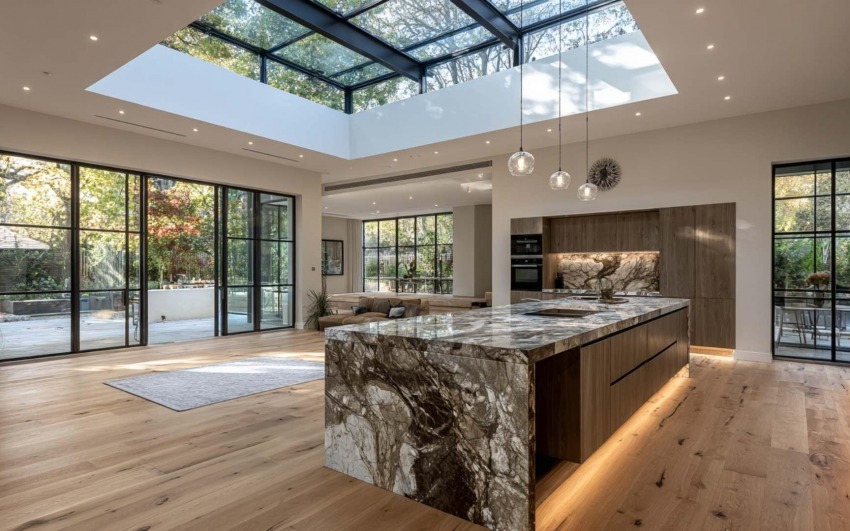
Smart Furnishing: How to Integrate Technology into Your Spaces

8/04/2023

Intelligent Lighting


One of the first areas where technology has merged with furniture is lighting. Smart lights allow you to adjust the brightness, color, and temperature of the lights through a mobile app or a voice assistant. You can create the perfect atmosphere for every moment of the day, transitioning from warm and cozy lighting to vibrant and energizing light with a simple tap on your smartphone. Additionally, some smart lights can be programmed to turn on or off automatically based on your daily schedule or preferences.


Eco-Sustainable-Interior-Design_IDW-Italia-Prague-Biella


Multifunctional Furniture


Smart furniture is not just about technology; it's also about functionality and space optimization. Multifunctional furniture has become increasingly popular, especially for homes with limited space. For example, sofas with pull-out beds, tables with integrated shelves, foldable desks, and Murphy beds are just some of the clever solutions that allow you to maximize available space. These pieces of furniture not only solve space issues but also offer comfort and convenience, adapting to various needs and daily activities.


Smart_Furniture_How_to_Integrate_Technology_into_Your_Spaces_IDW-Italia-Prague-Biella

Smart_Furniture_How_to_Integrate_Technology_into_Your_Spaces_IDW-Italia-Prague-Biella


Connected Appliances


Thanks to the Internet of Things (IoT), appliances can be interconnected and controlled via smartphones or voice assistants. This intelligent connection allows you to monitor and control appliances even when you're away from home. For instance, you can preheat the oven while you're at the office or check the refrigerator's temperature to ensure your groceries stay fresh. Furthermore, some appliances can learn your habits and preferences, automatically adapting to provide increased comfort and energy savings.


Smart_Furniture_How_to_Integrate_Technology_into_Your_Spaces_IDW-Italia-Prague-Biella


Home Automation


Home automation is a key aspect of smart furniture, where different devices and systems integrate to create a fully controllable home. You can automate your curtains to open or close at specific times of the day, regulate room temperature with a smart thermostat, and manage home security with connected cameras and alarms. These automation systems enhance your living experience, making your home more comfortable, secure, and efficient.


Smart_Furniture_How_to_Integrate_Technology_into_Your_Spaces_IDW-Italia-Prague-Biella

Smart_Furniture_How_to_Integrate_Technology_into_Your_Spaces_IDW-Italia-Prague-Biella


Comfort and Well-being


Smart furniture also caters to your comfort and well-being. You can integrate devices like smart music players, aroma diffusers, interactive fitness mirrors, and pressure-sensitive rugs to create an environment that promotes relaxation and health. Technology can be used to create a soothing atmosphere, diffuse pleasant scents, or monitor your progress during workouts. The goal is to create an environment that supports your physical and mental well-being.


Smart_Furniture_How_to_Integrate_Technology_into_Your_Spaces_IDW-Italia-Prague-Biella


Smart furniture offers endless possibilities to enhance the comfort, functionality, and efficiency of your home. By integrating technology into your living spaces, you can create a modern, futuristic, and inviting environment. From intelligent lighting to multifunctional furniture, connected appliances to home automation, smart furniture offers innovative solutions to simplify your daily life. By choosing to embrace these trends, you can transform your home into an intelligent and cutting-edge space that adapts to your needs and reflects your lifestyle. It's time to embrace the future of furniture and enjoy all the benefits that smart furniture has to offer.

Cristiano Castaldi IDW Italia
Cristiano Castaldi

Interior Designer since 1985

CEO & Founder, Italian Design in the World
Related Articles

  • The Anti-Algorithm Home: Spaces That Aren’t Instagrammable (But Truly Livable)
    2/13/2026 The Anti-Algorithm Home: Spaces That Aren’t Instagrammable (But Truly Livable)

    For years, we designed homes as if they had to pass a constant visual exam: perfect light, perfect white, the right chair, the right vase. Interiors built to be photographed more than lived in.
Digital aesthetics — polished, minimal, hyper-ordered — entered interior design like an unspoken rule: if it isn’t “clean,” it isn’t beautiful; if it isn’t coherent, it isn’t successful; if it can’t be shown, it isn’t desirable.In 2026, this narrative is losing its power. Not because beauty matters less, but because beauty alone is no longer enough.
A new need is emerging: anti-algorithm interiors, spaces not designed for the shot, but for everyday life. Less performative homes, more real ones. Environments that don’t seek approval — they restore energy.This is not a return to chaos. It’s a return to meaning.

  • The End of the Open Space: The Return of Thresholds
    1/30/2026 The End of the Open Space: The Return of Thresholds

    For years, open-plan living symbolized contemporary domestic design: fluid, bright, without barriers.
A response to the desire for freedom, openness, and visual continuity.Today, that promise is being reconsidered.
In 2026, many projects mark a shift — not a rejection of open space, but its critical evolution. The return of thresholds.

  • Interiors That Age Well: Designing Spaces Beyond Trends
    1/23/2026 Interiors That Age Well: Designing Spaces Beyond Trends

    One of the most underestimated challenges in contemporary design is time.
Not the time required to design a space, but the time the space must endure: years of daily life, change, wear, and transformation.

  • Living as a Cultural Act: When the Home Becomes a Position
    1/09/2026 Living as a Cultural Act: When the Home Becomes a Position

    In recent years, the home has stopped being a simple functional container.
It has become an extension of how we think, how we experience time, and how we relate to the world. Living today is a cultural act — a conscious choice that reflects values, priorities, and pace of life. It’s no longer just about aesthetics. It’s about position.

  • The Aesthetics of Ritual: How Design Shapes Everyday Habits
    1/02/2026 The Aesthetics of Ritual: How Design Shapes Everyday Habits

    Homes have become more than places — they have become temporal landscapes.
Design is shifting from objects to gestures, from furniture to the choreography of daily life.

  • The Material of the Future: Ultra-Thin Surfaces and Advanced Finishes
    12/19/2025 The Material of the Future: Ultra-Thin Surfaces and Advanced Finishes

    Material innovation is reshaping interiors more deeply than any aesthetic trend.
The new frontier is not in bold colors or complex textures — it lies in technical surfaces that are thin yet strong, discreet yet expressive, silent yet high-performing.